
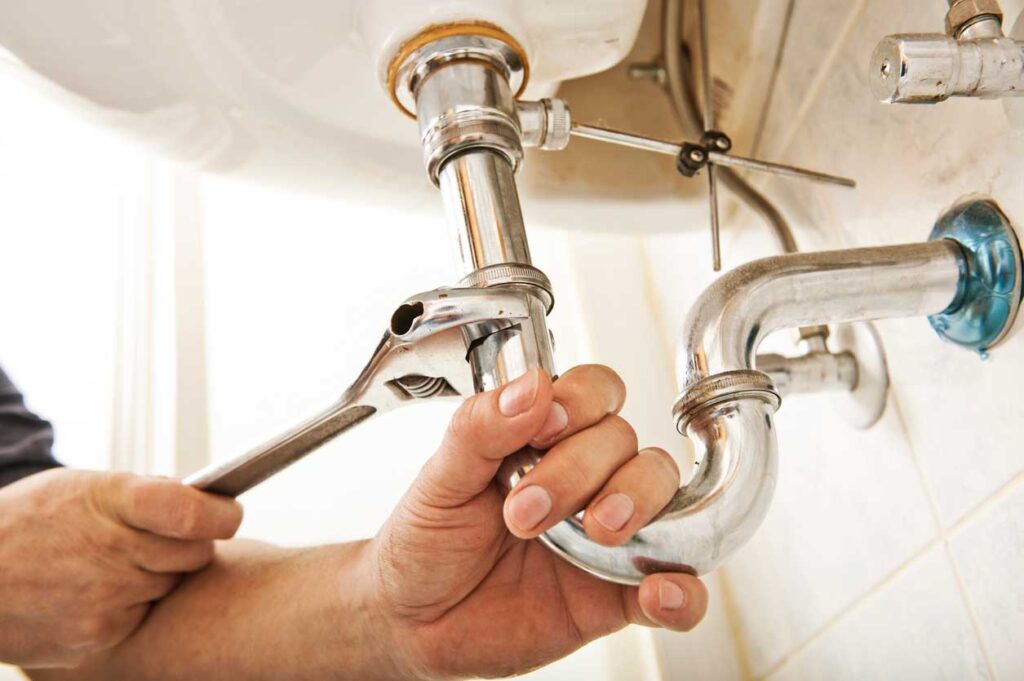
West Orange, New Jersey (subject to NJ Department of Environmental Protection standards) (subject to standards), is a community defined by its “Elevational Complexity”—from the rolling hills of the Llewellyn Park estates to the dense prewar residential pockets near the valley. This geography creates a series of “Hydraulic Stressors” that directly resemble the “Vertical Crises” found in Brooklyn’s prewar apartment buildings and brownstones. Whether you are in a four-story limestone row in Park Slope or a multi-level prewar home in West Orange, the “Technical Struggles” of pressure, siphoning, and material aging are identical. At Bkbrownstone, we focus on the elevational hydraulics of historic regions. Understanding how West Orange mimics Brooklyn is the first step in achieving a high-performance home in a historic shell. The “Valley” and the “Slope” share the same technical soul.
The “Pressure Drop” Paradox in Prewar Layouts
In both West Orange and Brooklyn, prewar homes were designed with a “Single-Riser” philosophy—one pipe feeding every kitchen and bath in a vertical line. This creates the classic “Pressure Drop” whenever a lower-floor resident turns on the tap. This “Volumetric Choking” is the result of 1920s-standard pipe sizing (usually 1/2-inch or 3/4-inch) trying to support 2025-standard demand. The “Reality” in both regions is that the riser is too small for the building’s ambition. Upsizing to a “Manifold System” is the only way to achieve modern stability. This is a primary topic in our historic and multi-level plumbing FAQ. Power is a matter of volume, regardless of which state you are in.
“Thermal Siphonage” and Vertical Heat Delay
Prewar West Orange homes feature long vertical runs of uninsulated iron or copper. This creates a “Thermal Siphonage” effect where the pipes themselves act as “Heat Sinks,” absorbing the energy from your hot water before it can reach the shower. This is the exact same phenomenon that results in the “3-Minute Wait” for hot water in Brooklyn’s higher floors. Achieving “Instant Heat” in these regions requires a modern “Recirculation Loop” or specialized “Point-of-Use” heaters. We document these thermal dynamics profiles in our restoration blueprints. Efficiency is a matter of shortening the thermal road. If the pipe is a sink, the water stays cold.
Groundwater and “Subterranean Infiltration”
West Orange’s “Hillside Geography” means that many homes sit on a natural drainage path. During heavy rains, the groundwater puts “Hydrostatic Pressure” on original clay sewer laterals—the same issue faced by low-lying Brooklyn neighborhoods like Red Hook and Gowanus. This lead (referenced in EPA Lead Safety Standards) s to “Root Intrusion” and “Cracked Main Lines” that cause recurring backups in the cellar. Every West Orange owner should perform a “Sewer Scope” to identify these “Subsidence Risks.” At Bkbrownstone, we focus on the watertight integrity of foundation penetrations. Your basement’s health is dictated by the soil’s pressure. Purity and dryness require defensive infrastructure.
“Dielectric Failure” in Renovated Pockets
The “Staged Renovations” common in West Orange since the early 2000s often suffer from “Dielectric Failure”—where new copper was tied into original 1920s iron without a plastic insulator. This creates a “Galvanic Hotspot” that accelerates internal rust production (Tuberculation). This is the #1 cause of “Orange Water” in otherwise “Modernized” homes in both Brooklyn and West Orange. At Bkbrownstone, we emphasize the material harmony of historic skeletons. True purity requires a single-material reset from the meter to the tap. Turbulence and rust are the enemies of pressure. Integrity is a matter of material logic. Where this mixed-metal pattern appears in a Brooklyn home, heavy metals testing for drinking water in Brooklyn can help assess whether metals are reaching the tap.
” designated Infrastructure” and Permission Cycles
Both regions feature historic districts where utility replacements require a “Permit Symphony.” In West Orange, working on a home in Llewellyn Park or a designated historic area requires the same specialized “Restoration Standards” as a landmarked brownstone in Clinton Hill. At Bkbrownstone, we help you understand the technical and legal context of historic utility work. A proper main replacement isn’t just about the pipe; it’s about the preservation of the neighborhood’s architectural soul. Data from the city is the first step in a successful historic project. Purity is a result of technical mastery and legal sensitivity.
Conclusion: A Shared Regional Infrastructure
West Orange’s plumbing patterns are a direct reflection of the prewar engineering challenges that define Brooklyn’s most iconic neighborhoods. By recognizing the roles of pressure drops, thermal siphonage, subterranean infiltration, dielectric failure, and landmark constraints, you can manage your home’s performance with total technical confidence. Don’t be confused by the landscape; the technical reality of the early 20th century is universal. Your home is a masterpieces that deserve an engine of absolute integrity. At Bkbrownstone, we provide the audits and the expertise needed to find clarity in the layers of historic plumbing. A clear glass and a stable home are the result of an informed, cross-regional strategy. Know your house, respect the era, and always Know Your Tap.